
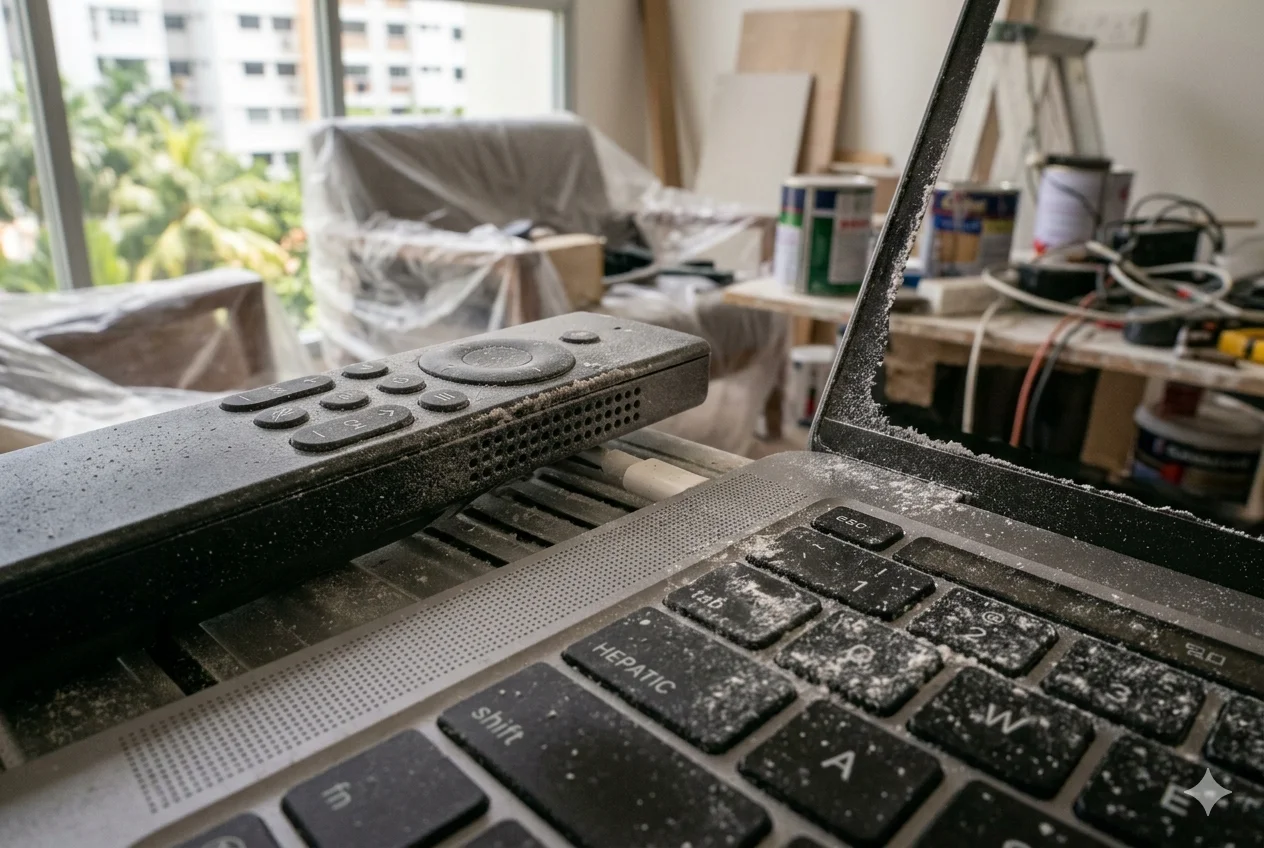
How Construction Dust Affects Electronics and Appliances
After renovation, construction dust can settle everywhere — not just on floors and shelves. Fine dust particles can enter small gaps, vents, appliance openings, and electronic surfaces, making proper post-renovation cleaning essential before daily use resumes.
After renovation, construction dust can settle everywhere — not just on floors and shelves. Fine dust particles can enter small gaps, vents, appliance openings, and electronic surfaces, making proper post-renovation cleaning essential before daily use resumes.
Why construction dust is different from normal dust
Regular household dust usually comes from skin flakes, fabric fibres, outdoor dirt, and everyday activity. Construction dust, however, often contains fine particles from drilling, sanding, hacking, cement, plaster, paint, wood, and renovation materials.
Construction dust is often finer and more stubborn than normal dust. Because of its particle size, it can travel into small gaps, settle inside vents, and reappear even after basic wiping or mopping. This is why many newly renovated homes still feel dusty even after a quick clean.
How construction dust can affect electronics
01 — Blocks ventilation gaps
Electronics rely on airflow to prevent overheating. Dust can settle around vents, fans, and openings, reducing airflow and causing devices to work harder.
02 — Builds up on screens and surfaces
Fine renovation dust can leave screens, monitors, keyboards, and remote controls feeling gritty, dull, and uncomfortable to use.
03 — Settles into small gaps
Dust can enter gaps around buttons, ports, speakers, cable openings, and appliance seams, making it harder to remove later.
Appliances commonly affected by renovation dust
- Air-conditioners — Dust can settle around vents, filters, and nearby surfaces, affecting airflow and cleanliness.
- Televisions and monitors — Screens, rear panels, ports, and ventilation slots can collect fine dust after renovation.
- Refrigerators — Dust may collect behind, under, and around the appliance, especially near ventilation areas.
- Washing machines — Dust can settle around control panels, rubber seals, gaps, and surrounding floor areas.
- Kitchen appliances — Microwaves, ovens, hobs, hoods, and small appliances can collect dust mixed with grease.
- Computers and routers — Fine dust can gather around fans, ports, cables, and ventilation areas.
How to reduce dust impact after renovation
- Start with dry dust removal — Removing loose construction dust before wet wiping helps prevent dust from turning into streaky or muddy residue.
- Clean from top to bottom — High surfaces, cabinet tops, vents, ledges, and walls should be cleaned before floors.
- Pay attention to appliance surroundings — Areas behind, beside, and under appliances often collect heavy dust because they are hard to reach during renovation.
- Use suitable cleaning methods — Different surfaces require different cleaning approaches. Electronics should not be soaked or sprayed directly with excessive liquid.
Final thoughts
Construction dust can affect more than just the look of your home. It can settle around electronics, appliance vents, furniture surfaces, hidden corners, and airflow areas. If not removed properly, it may continue to circulate and make the space feel dusty even after renovation is completed. A proper post-renovation cleaning routine helps protect your living environment, reduce residue build-up, and prepare your home for comfortable daily use.
Ready to book a professional clean?
Mon–Sun · 8 AM–9:30 PM · Free quote on WhatsApp

Let’s Make Your Space
Spotless.
Join 1,000+ Singapore homeowners and businesses who trust Eminence Cleaning. Get a free quote via WhatsApp — we respond within a few hours.