
Why Homeowners Shouldn't Rush Move-In After Renovation
After weeks or months of renovation, it is natural to feel excited about moving in. But even when your home looks completed, it may still contain fine construction dust, chemical odours, and surfaces that need proper cleaning before daily living begins.
After weeks or months of renovation, it is natural to feel excited about moving in. But even when your home looks completed, it may still contain fine construction dust, chemical odours, sticky residue, hidden debris, and surfaces that need proper cleaning before daily living begins.
Your home may look ready before it is truly move-in ready
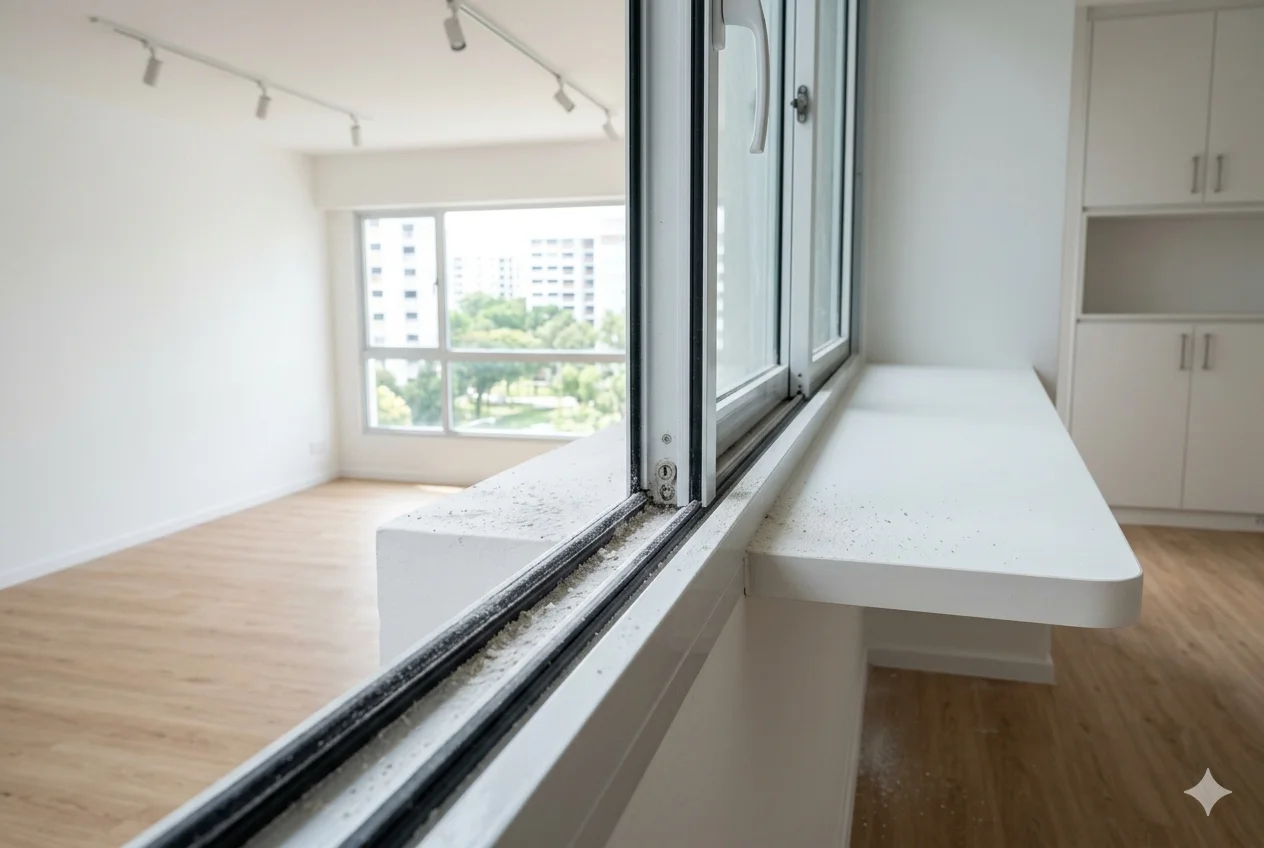
Renovation handover does not always mean the home is fully clean. Contractors may clear visible debris, but fine dust and residue can remain on floors, cabinets, countertops, window tracks, appliance areas, air-con ledges, and hidden corners.
Moving in too quickly can cause dust and residue to spread onto your furniture, clothing, bedding, appliances, and personal belongings.
A proper post-renovation cleaning helps remove renovation dust and residue before you start unpacking and using the space daily.
Reasons not to rush move-in after renovation
01 — Fine renovation dust settles everywhere
Drilling, sanding, carpentry, painting, hacking, and tiling can produce fine dust that settles on surfaces and inside small gaps. Even if the home looks clean, dust may still be sitting on ledges, cabinets, tracks, and floor edges.
02 — Dust can spread to your new furniture
If you move furniture in before cleaning properly, dust can settle onto sofas, mattresses, curtains, rugs, wardrobes, and soft furnishings. This can make your new home feel dusty almost immediately.
03 — New carpentry may release strong odours
Built-in wardrobes, cabinets, laminates, adhesives, and other renovation materials can contribute to lingering indoor smells. If the home feels stuffy or has a strong new-renovation scent, it may need more airing and treatment.
04 — Sticky or powdery floors may remain
Renovation residue can mix with water during mopping, leaving floors feeling sticky, powdery, or cloudy. This often requires a more detailed cleaning process than basic mopping.
05 — Appliances and electronics may collect dust
Fine dust can settle around appliance gaps, ventilation areas, sockets, air-conditioner surfaces, and electronic devices. Cleaning before move-in helps reduce dust spreading into these areas.
06 — Hidden corners are harder to clean later
Once furniture, boxes, appliances, and personal items are moved in, it becomes harder to clean behind cabinets, under beds, inside wardrobes, and along skirting boards properly.
Post-renovation cleaning should happen before unpacking
The best time to clean is after renovation works are completed, but before large furniture and personal belongings are moved in. This allows cleaners to access empty rooms, cabinet interiors, floor edges, windows, toilet areas, kitchen surfaces, and hard-to-reach spaces more effectively.
Before moving in, check these areas carefully
- Inside wardrobes, drawers, kitchen cabinets, and shelves
- Window tracks, glass panels, ledges, and grilles
- Floors, skirting boards, corners, and grout lines
- Bathroom tiles, shower screens, sinks, and toilet areas
- Kitchen countertops, backsplash, hob area, and appliance spaces
- Air-con ledges, vents, ceiling corners, and high surfaces
- Power sockets, switches, door handles, and built-in carpentry surfaces
What about formaldehyde after renovation?
If your home has new carpentry, built-in wardrobes, cabinets, laminates, flooring, or strong chemical-like odours, you may want to consider formaldehyde-related concerns before moving in. Professional formaldehyde removal can be useful for homeowners who want to improve indoor comfort after renovation, especially before placing clothing, bedding, and daily-use items into newly built storage areas.
Soft furnishings should come in after the dusty work is cleared
Sofas, mattresses, curtains, rugs, and fabric chairs can trap dust easily. If these items are moved in before renovation dust is properly removed, they may absorb particles and odours from the space. If your soft furnishings have already been exposed to renovation dust, steam and upholstery cleaning can help refresh them.
Final thoughts
Moving in right after renovation may feel convenient, but it can make cleaning harder and expose your belongings to dust, residue, odours, and hidden debris. A newly renovated home should be cleaned and aired properly before daily living begins. By arranging post-renovation cleaning, checking hidden areas, and addressing indoor odours early, homeowners can enjoy a cleaner, fresher, and more comfortable move-in experience.
Ready to book a professional clean?
Mon–Sun · 8 AM–9:30 PM · Free quote on WhatsApp
Let’s Make Your Space
Spotless.
Join 1,000+ Singapore homeowners and businesses who trust Eminence Cleaning. Get a free quote via WhatsApp — we respond within a few hours.